Dialogue with business: acting Head of the State Tax Service Lesya Karnaukh discussed with entrepreneurs SAF-T UA, risk-based approach to audits and improvement of the Monitoring system of risk assessment criteria
Press service of the State Tax Service of Ukraine , published 29 July 2026 at 11:35 Chapter: News
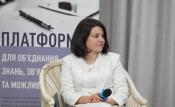
Open dialogue with business allows finding solutions to systemic problems, rather than reacting to individual cases. This was noted by acting Head of the State Tax Service Lesya Karnaukh during the meeting with representatives of the CFO Club Ukraine.
“Open dialogue with business allows us to solve systemic problems, rather than reacting to them in a one-off manner. I met with representatives of the CFO Club Ukraine, which brings together financial directors of large and medium-sized business. Conversation was extremely practical, sometimes even emotional. Business is not interested in theory, but in specific answers to what affects their work. Especially in the war times” – she said.
Considerable attention was paid to the SAF-T UA.
In January of this year, the State Tax Service introduced the E-audit, which provides for submission of a single standardized SAF-T UA file by large taxpayers only in case of tax request during a documentary audit. We strive for the SAF-T UA to be familiar element of the company’s accounting system. This will reduce the audit’s time, improve their quality and minimize tax control. We are improving methodology and developing the E-audit information system.
“Question that worries entrepreneurs is when the SAF-T UA will become obligatory for small and medium-sized business. Our position is clear – it will not happen all at once. Everything will be gradual – without stress for business. Therefore, it is important to work out changes to the Tax Code regarding the phased introduction of the SAF-T UA. Clear algorithm: testing, adaptation of accounting systems and methodological support for payers, and only then – full-fledged application of the new tool. We will help business as much as possible” – Lesya Karnaukh stated.
A separate block of aspects is audits and its quality. State Tax Service has significantly changed approach to the tax control.
“Not quantity, but quality. And only where there are risks. That is why we are actively implementing a risk-oriented approach” – added acting Head of the State Tax Service.
Basis is the tax risk management system. Plan-schedule includes payers with a high degree of risk, determined based on the analysis results of information available in the information and communication systems of the State Tax Service. The focus is on those industries where we see the greatest concentration of tax risks: mining and processing industries, energy, wholesale and retail trade, transport, gambling, etc. We make decisions regarding audits only if there are high-level risks.
“Such approach is yielding results. On average, a number of unscheduled and actual documentary audits has decreased by 26%” – Lesya Karnaukh said.
One more important block is improvement of Monitoring system of risk assessment criteria and reduction of number of unjustified block of tax invoices.
State Tax Service has already managed to reduce percentage of blocked invoices from 0.76% at the beginning of 2025 to 0.14% as of now. And we have been maintaining this indicator for a long time. We are working to make this procedure even simpler for conscientious payers.
“I also heard that there are cases when commissions dealing with block of tax invoices and risk removal require some “additional documents” from payers. I am fundamentally against such practice. I have already instructed the State Tax Service’s specialists to thoroughly investigate each specific fact. Commissions should only require those documents that are necessary for making a decision. Not more” – Lesya Karnaukh added.
A number of other topics were also discussed: development of digital services and modernization of the Electronic cabinet, introduction of tax compliance, development of international automatic exchange of information (CRS), VAT refunding.